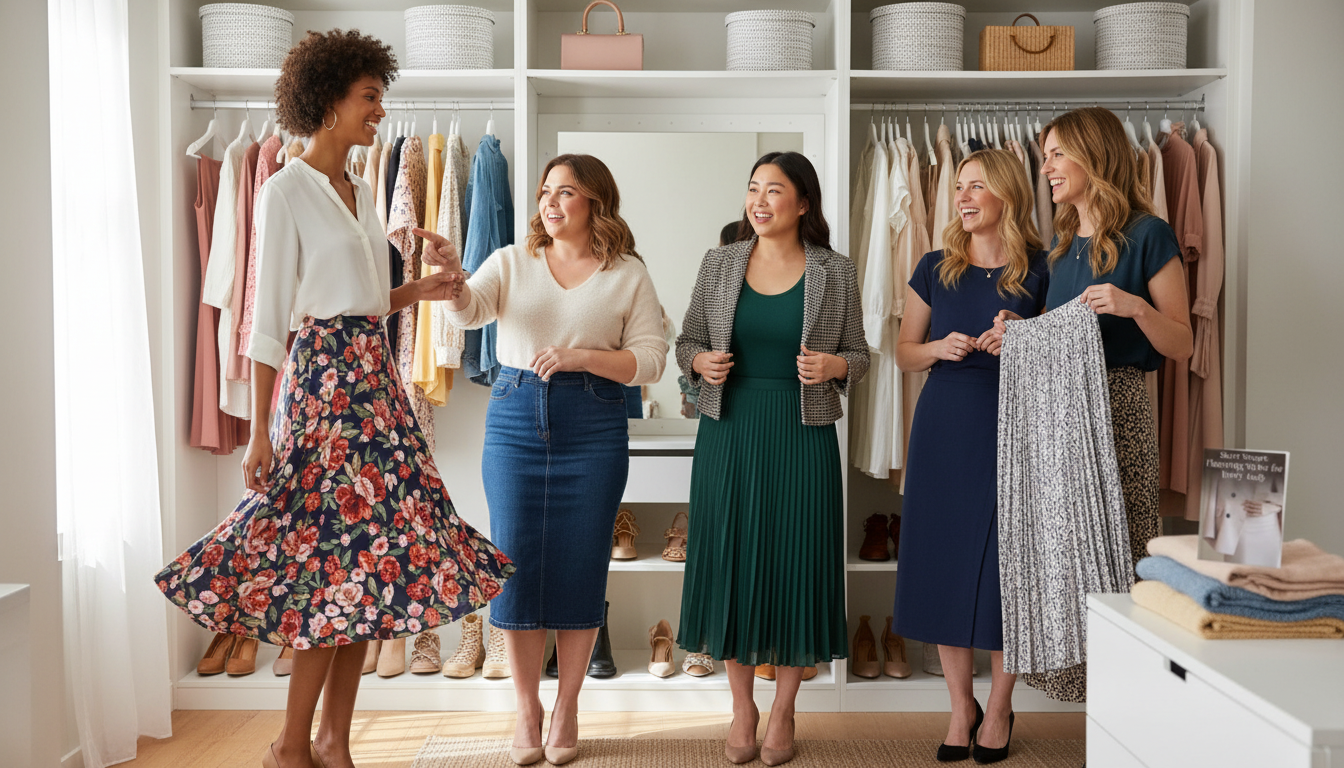
Skirts can be the easiest way to look polished—when the silhouette, rise, and hemline work with your proportions and comfort. The goal isn’t to “fix” your body; it’s to choose cuts that support how you like to feel in clothes (confident, streamlined, playful, or office-ready). Below is a practical breakdown of the most wearable skirt styles, how to match them to common body-shape goals, and how to use simple AI styling prompts to build outfits faster with fewer “nothing to wear” moments.
Sit, walk, and climb a step. The waistband should stay put, the hem shouldn’t twist, and the skirt shouldn’t ride up—those are usually signs the hip area is too tight or the cut needs more stride room.
| Priority | Best Skirt Traits | Styling Shortcut |
|---|---|---|
| Look taller | High rise, clean front, midi or maxi with slit | Monochrome top + skirt; pointed-toe shoe |
| Define waist | High rise, A-line or wrap, waistband with structure | Tuck or half-tuck; add a belt only if waistband is smooth |
| Skim hips/thighs | Bias cut, gentle A-line, soft pleats starting below the hip | Keep top fitted or cropped to avoid bulk |
| Add curves/volume | Pleated, bubble, tiered, tulip, textured fabrics | Pair with a sleek knit or bodysuit |
| Easy workwear | Pencil, straight midi, subtle A-line | Blazer + simple heel/loafer; keep prints minimal |
Fashion history shows how skirt shapes shift with culture and practicality—yet the best personal wardrobe choices stay anchored in comfort and proportion. If you enjoy the bigger picture, the Metropolitan Museum of Art’s fashion and dress timeline and Smithsonian history coverage are great resources for understanding how silhouettes evolved.
If sizing feels inconsistent across brands, measurement standards and textile context can help you shop with fewer surprises. The National Institute of Standards and Technology (NIST) provides helpful background on measurement systems and standards that influence apparel sizing practices.
For a practical finishing touch that pulls outfits together, a small accessory can do a lot of work—especially for day-to-night plans. The Blue Vintage Floral Makeup & Travel Clutch Bag is an easy add-on for carrying essentials without overpowering your look.
If you want a more step-by-step approach (with outfit pairings you can reuse), Skirt Smart: Flattering Styles for Every Body (digital styling guide) is designed to make skirt outfits feel simple and repeatable.
For a separate, quick-win routine upgrade, the Hair Detangling Checklist (digital download) pairs well with getting ready faster—especially on days you’re building outfits on the fly.
Midi length (often hitting around mid-calf) tends to work for the widest range of heights and settings because it reads polished and is easy to balance with footwear. If you want more leg line, try a high-rise midi with a slight slit, or pair a midi with a pointed-toe shoe. Minis and maxis can be equally flattering when they match your comfort level and the proportions of your top.
Start by fitting the hips correctly—tightness usually shows up there first—then choose cuts that add ease through movement, like A-line shapes or a slit. Prioritize drape and stretch in the fabric rather than sizing down, and consider smoothing layers for a clean look without restriction.
Share the skirt’s rise, length, and silhouette, plus your body-shape goal, occasion, weather, and footwear preferences, along with what you already own. For example: “Create 5 walking-friendly outfits for a high-rise black A-line midi; highlight my waist; I prefer flats; it’s 70°F; use a white tee, denim jacket, and gold jewelry.”










Leave a comment