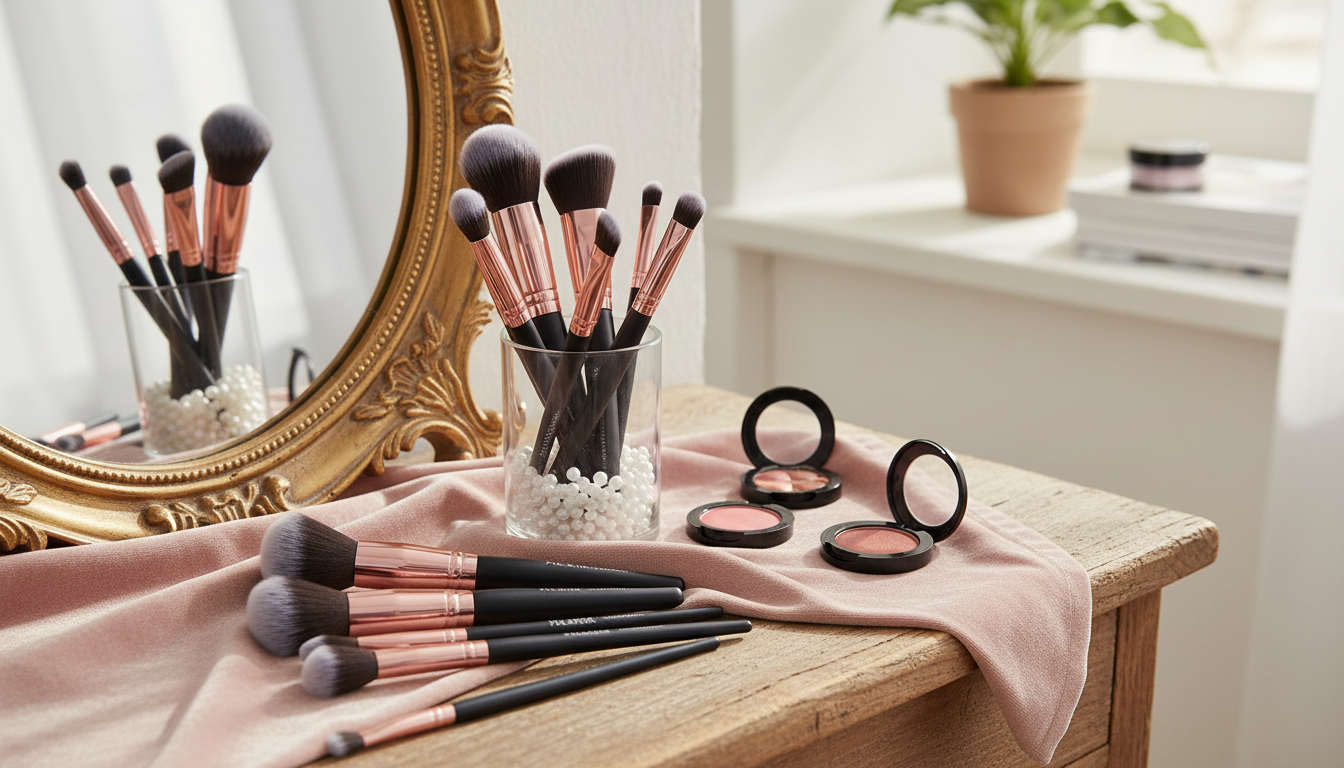
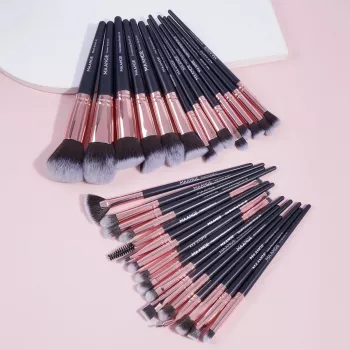
A complete brush set can simplify makeup application by giving each product its own tool, helping blends look smoother and more intentional. A 30-piece collection covers complexion, cheeks, brows, and detailed eye work, so it’s easier to build a reliable routine at home or keep your kit consistent when you’re getting ready on the go. For more guidance, see The 7 Best Makeup Brushes of 2026 | Reviews by Wirecutter.
Having more than “one face brush and one eyeshadow brush” changes how makeup sits on the skin. Instead of forcing every formula to work with the same tool, you can match brush density, size, and shape to the finish you want. For further reading, see The 11 Very Best Makeup Brushes and Makeup-Brush Sets.
If you’ve ever noticed foundation clinging around the nose or eyeshadow looking muddy, the fix is often less about buying more makeup and more about using a brush designed for that exact job.
A well-rounded set typically includes face brushes (for coverage and powder), cheek brushes (for placement and lift), eye brushes (for building and blending), and small detail brushes (for precise cleanup and definition). A simple rule helps: denser brushes lay down product; fluffier brushes soften and diffuse.
| Brush category | Best for | Tip for a smoother finish |
|---|---|---|
| Dense face brush | Liquid or cream foundation | Work in thin layers; tap then buff to avoid streaks |
| Fluffy powder brush | Setting powder, finishing powder | Press powder into the T-zone, then lightly sweep the edges |
| Angled cheek brush | Blush or contour | Start higher on the cheekbone and blend upward for lift |
| Small tapered brush | Highlight or targeted setting | Use light pressure; build gradually to prevent harsh shine |
| Flat shader brush | Packing eyeshadow on the lid | Pat to intensify color, then blend the edges with a separate brush |
| Blending crease brush | Softening transitions | Use windshield-wiper motions with minimal product for seamless edges |
| Smudge/detail brush | Lower lash line, outer-corner depth | Keep product close to the lash line, then diffuse slightly |
For everyday makeup, the goal is even coverage, soft edges, and controlled placement. Using separate brushes for base, powder, and cheeks keeps the look clean (and helps prevent over-applying).
A small habit that makes a big difference: keep one fluffy brush “clean” for final blending only. It’s an easy way to blur edges without adding more pigment.
Evening makeup reads best when it’s built in controlled layers—coverage that still looks like skin, cheeks with shape, and eyes that have contrast. The extra brush options in a larger set make these steps faster because you’re not constantly wiping the same brush between shades.
Brush performance depends on clean bristles and a secure ferrule (the metal part). Product buildup can make brushes feel stiff, skip across the skin, and blend unevenly. For practical hygiene guidance, the American Academy of Dermatology Association recommends washing regularly, and the U.S. Food & Drug Administration outlines general cosmetics safety considerations.
Clean eye brushes more frequently (every few uses or weekly if you wear shadow often), and wash face brushes at least weekly or every two weeks depending on product buildup. Spot-cleaning between colors helps blending stay smooth and prevents shades from turning muddy.
It can work in a pinch, but dedicated brushes help prevent caking and uneven texture. If you do switch formulas, fully wash and dry the brush first so powder doesn’t cling to leftover liquid product.
Match the shape to the job: flat brushes pack color, fluffy brushes blend edges, tapered brushes target the crease, and small brushes handle detail. A simple starter combo is one flat shader, one medium fluffy blender, and one small smudge brush.











Leave a comment